Quick answer: for planning inventory, start with the number of adult guests who may drink, multiply by the event length, then use an average of 0.75 to 1 serving per guest per hour. Adjust for your crowd, menu, season and transportation plan. This is a purchasing estimate, not a drinking target. Always provide water, food and appealing alcohol-free choices.
The Simple Party Drink Calculator
The hardest part of planning a bar is rarely choosing a signature cocktail. It is deciding how much to buy. Too little creates a service problem halfway through the night. Too much ties up your budget and leaves you managing unopened bottles after the event.
A useful estimate begins with four numbers: adult guest count, expected drinking guests, service hours and servings per hour. Do not automatically count every adult as a drinker. Ask about alcohol-free preferences on the RSVP when possible, and include designated drivers, guests who are pregnant, people taking medication and anyone who simply prefers not to drink.
Step 1: Estimate the number of drinking guests
If you have reliable RSVP data, use it. If you do not, build two scenarios rather than pretending one number is exact. A conservative scenario might assume 65% of adults will choose alcoholic drinks; a higher scenario might use 80%. Your final order can sit between those scenarios, with more room for low-cost items such as soda water and less room for expensive specialty ingredients.
The planning formula
Drinking guests × service hours × 0.75 to 1 serving per hour = estimated total servings.
A 100-guest example
Imagine 100 adult guests, with 75 expected to drink, and a five-hour bar. At 0.75 servings per hour, the estimate is 281 servings. At one serving per hour, it is 375. That range helps you plan intelligently: use the lower end for a daytime event with a full meal and strong zero-proof menu; move toward the upper end for a longer evening reception where the bar is a central feature.
One important reminder
Inventory math is not a recommendation for individual consumption. Guests drink at different rates, and some will have none. Professional bartending is valuable because service can be paced, portions measured and concerning behaviour addressed.
Quick estimates by event size
| Adult guests | Estimated drinking guests | 4-hour event range | 5-hour event range |
|---|---|---|---|
| 25 | 16–20 | 48–80 servings | 60–100 servings |
| 50 | 33–40 | 99–160 servings | 124–200 servings |
| 100 | 65–80 | 195–320 servings | 244–400 servings |
| 150 | 98–120 | 294–480 servings | 368–600 servings |
These ranges are intentionally broad. A tailored estimate is much more useful than a generic chart. If you want help building the right service plan, compare our mobile bartending packages or review our full list of bartending services.
Convert Servings Into Bottles, Cans and Mixers
Once you have a total number of servings, divide it across wine, beer or cider, spirits and zero-proof drinks. The best split comes from your guest list. If you can ask one RSVP question—wine, beer, cocktail or alcohol-free—you will reduce waste more effectively than any universal rule.
Use standard serving sizes for consistent math
Health Canada defines a Canadian standard drink as approximately 341 mL of 5% beer or cider, 142 mL of 12% wine, or 43 mL of 40% spirits. Those measurements make bottle estimates consistent and help bartenders pour accurately. You can review the official Canadian standard drink sizes.
- 750 mL wine bottle: about five 142 mL servings.
- 750 mL spirit bottle: about seventeen 43 mL servings before allowing for spillage and recipe variation.
- 24-pack of 341 mL beer or cider: twenty-four standard servings at 5% alcohol.
- Sparkling wine: plan approximately six 125 mL pours from a 750 mL bottle for a toast.
For cocktails, calculate the spirit used in the actual recipe. A highball with 43 mL of spirit and a spirit-forward cocktail with 60 mL do not yield the same number of drinks per bottle. Finalize the menu before you buy.
Choose a beverage mix that fits the event
As a starting point only, a mixed crowd might divide alcoholic servings into 40% wine, 30% beer or cider and 30% cocktails. Then modify the mix:
- Wedding dinner: increase wine during dinner, then shift toward cocktails afterward.
- Corporate reception: emphasize wine, beer, light highballs and strong zero-proof choices.
- Summer outdoor party: increase cold beer, spritz-style drinks, water and ice.
- Winter celebration: allow for spirit-forward cocktails, but keep water visible and easy to reach.
- Cocktail-focused event: limit the menu to two or three signatures so service remains fast and purchasing stays controlled.
Build the Complete Bar Shopping List
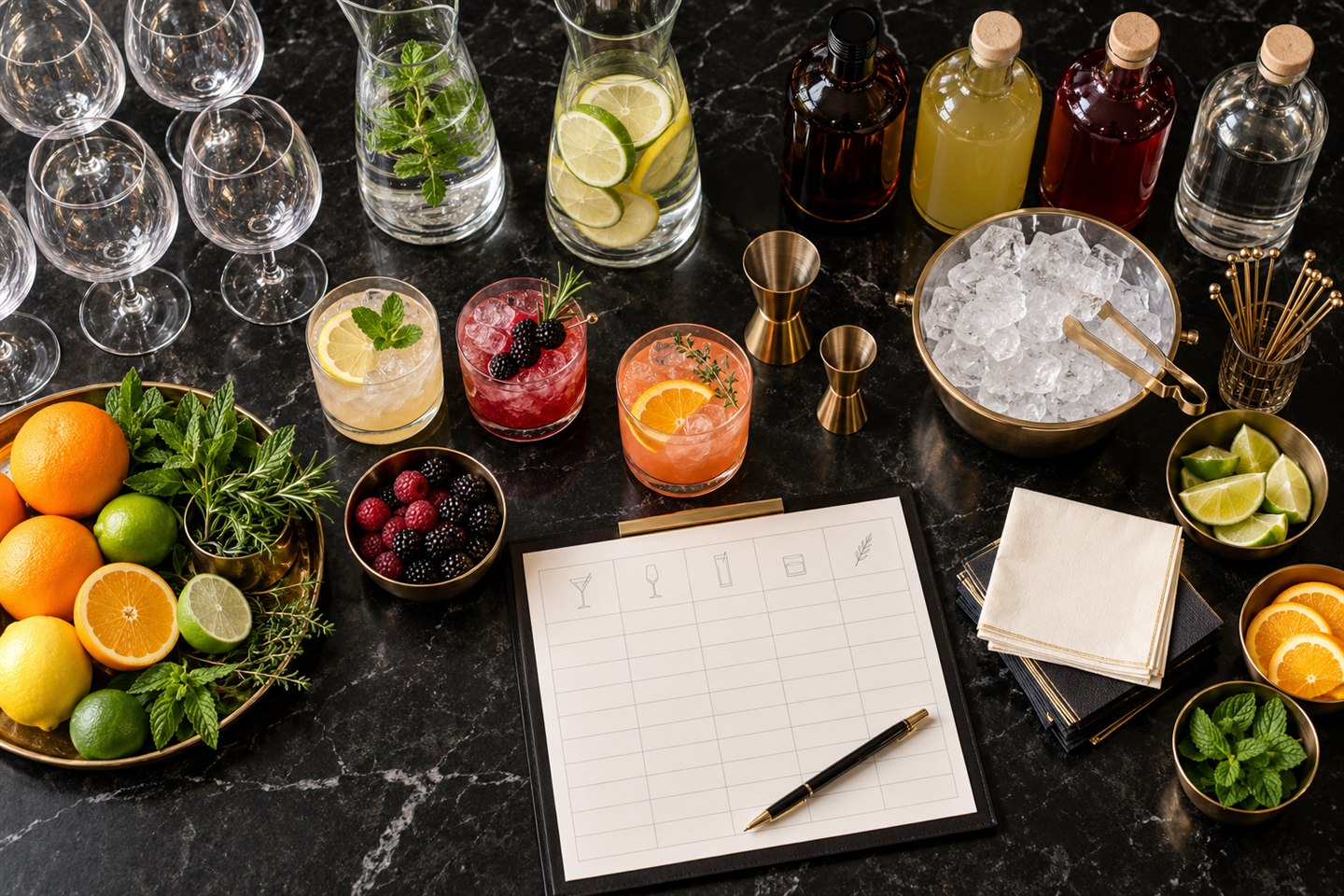
Alcohol is only one part of a functioning event bar. A beautiful menu can still fail if the bar runs out of ice, clean glassware or citrus. Build your shopping list in layers.
1. Core beverages
List every wine, beer, cider and spirit by brand-neutral category first. Confirm bottle sizes because a 1.14 L bottle changes the yield. Keep one backup option in the same style instead of buying many unrelated products that make the bar slower.
2. Mixers and lengtheners
Count the mixer volume per recipe and multiply it by expected orders. Include soda water, tonic, cola, ginger beer, juice and any house-made syrups. Add a modest buffer for drinks served long, unexpected zero-proof requests and minor spillage.
3. Ice
Ice chills drinks, fills glasses and keeps bottles cold, so the total can be surprisingly high. The exact amount depends on venue refrigeration, drink style, weather, glass size and whether separate ice is used for service and chilling. Treat ice as its own calculation, confirm storage with the venue and schedule delivery close to service time.
4. Garnishes and fresh ingredients
Garnishes should support the menu rather than create a second grocery store behind the bar. Use ingredients across multiple drinks: lemons for twists and juice, limes for wedges and highballs, herbs for both cocktails and alcohol-free spritzes. Prepare a little extra, but avoid cutting all fruit too early.
5. Glassware and service tools
Match glassware to service speed. If the venue cannot wash and turn glasses quickly, you need enough inventory for peak demand. Confirm jiggers, shakers, strainers, bar spoons, wine keys, ice scoops, napkins, straws, waste bins and sanitizing supplies. Our bartending FAQ answers common questions about what is included and what hosts may need to provide.
Seven Factors That Change Your Drink Estimate
- Event length: calculate actual bar hours, not the entire venue rental.
- Time of day: brunch and afternoon events often have different demand than late-night receptions.
- Season and temperature: warm weather increases demand for water, ice and lighter beverages.
- Meal format: a seated dinner creates different service waves than a cocktail reception.
- Guest preferences: cultural expectations, age mix and familiar favourites matter.
- Transportation: shuttles, rideshare plans and designated drivers can influence guest choices.
- Bar menu size: a focused menu is faster, easier to stock and usually more consistent.
Do not forget the service timeline. A pre-ceremony welcome drink, cocktail hour, dinner wine, toast and late-night bar are separate moments. Put them on a schedule and assign inventory to each one.
Make Zero-Proof Drinks Part of the Main Menu
Alcohol-free drinks should feel intentional. Offer at least one zero-proof option with the same care as your signature cocktails, plus chilled water and familiar soft drinks. A bright citrus spritz, berry and herb cooler, or ginger-lime highball gives guests a real choice without forcing them to explain why they are not drinking.
Use distinct garnishes or glass markers so servers and guests can identify drinks quickly. Keep alcohol-free ingredients and tools organized to avoid accidental mixing. This also helps the bartender serve designated drivers and guests who switch to zero-proof later in the event.
Responsible Hosting in Ontario
A well-planned bar protects the experience as well as the inventory. Smart Serve recommends measured standard servings, food and non-alcoholic beverages, monitoring consumption, preventing access by minors and having a safe transportation plan. Its social host guidance is a practical starting point for private hosts.
Your venue and event type may also require a Special Occasion Permit. The Alcohol and Gaming Commission of Ontario explains that permits can apply when alcohol is sold, served or consumed outside a licensed establishment or private place. Check the current AGCO permit requirements early because timelines and notices can vary.
- Serve measured portions rather than offering an uncontrolled self-serve bar.
- Keep water and food available throughout service.
- Train staff to recognize signs of intoxication and stop service when needed.
- Check identification and keep alcohol away from guests under 19.
- Arrange taxis, rideshare codes, public transit information or designated drivers.
- Close the bar at the agreed time and communicate last call clearly.
When to Hire a Professional Mobile Bartender
For a small dinner, a simple self-managed setup may be enough. For a wedding, corporate event or larger private party, a professional bartender can turn a complicated shopping list into an organized service plan. The value is not limited to mixing drinks. It includes menu design, portion control, bar layout, prep timing, service speed, guest care and cleanup.
OZ The Mixologist provides mobile bartending across Toronto, the GTA and Southern Ontario, with customizable packages for intimate celebrations and larger events. View examples in our cocktail and event gallery, or explore our mixology classes and bartending courses if you want to build your own skills.
A Final Checklist Before You Buy
- Confirm the final adult guest count and alcohol-free preferences.
- Confirm legal requirements with the venue and AGCO.
- Set exact bar opening, last call and closing times.
- Choose two or three signature cocktails and one strong zero-proof option.
- Calculate servings, then convert them into bottle and package quantities.
- Calculate mixers, ice, garnishes and glassware separately.
- Plan refrigeration, storage, delivery and leftover handling.
- Confirm who is serving, checking ID and monitoring guest safety.
- Share transportation options before the event.
- Review the final list with your bartender before purchasing.
Need a tailored estimate? Tell OZ The Mixologist about your event. We will help you match the menu, staffing and bar setup to your guest count, venue and vision.
Frequently Asked Questions
How many drinks should I plan per person for a party?
For inventory planning, begin with 0.75 to one serving per expected drinking guest per hour, then adjust for the event format and RSVP preferences. This is a purchasing range, not a recommendation for consumption.
How many glasses are in a 750 mL bottle of wine?
A 750 mL bottle provides about five Canadian standard 142 mL wine servings. Pour size and service style can change the practical yield.
How many cocktails can I make from a 750 mL bottle?
At 43 mL of spirits per drink, a 750 mL bottle provides about seventeen servings. Recipes using larger pours will produce fewer cocktails.
How much alcohol do I need for 100 guests?
If 65 to 80 guests are expected to drink during a five-hour event, a planning range is approximately 244 to 400 total servings. Divide that total according to actual guest preferences, and include robust zero-proof choices.
Do I need a permit to serve alcohol at an Ontario event?
It depends on the venue, whether alcohol is sold and the type of event. Review current AGCO Special Occasion Permit rules and confirm requirements with your venue before purchasing alcohol.
Can a mobile bartender create the shopping list?
Yes. A professional can calculate quantities from your guest count, timeline and menu, then organize mixers, ice, garnishes and equipment. Ask what purchasing and consultation support is included in your selected package.